- Top rated
Description
Wine is a complex combination of water, alcohol and other substances such as organic acids, phenols, sugars, carbon dioxide, and sulfur dioxide. The chemical interactions of these compounds, combined with the aging process, determine the quality of the color, taste and aroma of the wine. However, during this process, the chemical interactions can also play key roles in spoiling the wine. For instance, cork taint transpires when naturally occurring airborne fungi are in the presence of chlorophenol compounds to form 2,4,6-trichloranisole (TCA) in the wine. When this occurs, the wine’s aroma is reduced significantly and is replaced by an undesirable smell and taste.
To help regulate the spoilage, the wine industry tests for several compounds that are known to cause the spoilage. Our Certified Reference Materials (CRMs) for wine are specifically designed for GC, GC/MS, HPLC and LC/MS analysis. These standards are manufactured from the highest purity starting materials and the highest grade of solvents available in order to guarantee superior quality.
Intended Use
Analytical standards for wine help regulate the chemical interactions that play key roles in wine spoilage
More Information
Accredited by A2LA to ISO/IEC 17025:2017 and ISO 17034:2016|Manufactured for GC, GC/MS, HPLC, LC/MS, and other analytical instrumentation
Documents
Product Information
- Brand Spex
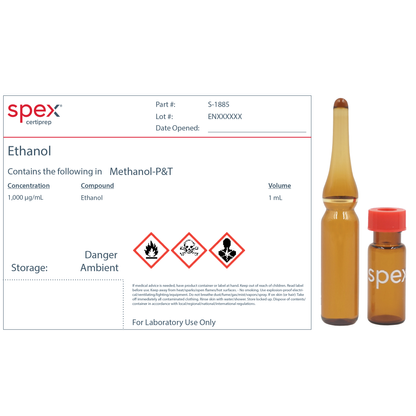
- Volume 1 mL
- Unit of Measure EA
- Storage Condition 15 to 30°C
- Product Type Organic Standard
- Matrix Methanol-P&T
- Concentration 1, 000 μg/mL
- Raw Material >95% min; as available
- Certification Single: Grav. &/or Volume w/Analytical Confirm
- CAS number 64-17-5
- Analyte/Component Ethanol
 Powered by Bioz